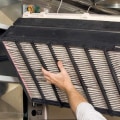
15x20x4 Air Filters: How Do I Know They Need Changing?
A four-inch filter can hide its own failure for weeks. We have slid 15x20x4 filters out of return grilles that looked clean from the front and sat packed solid right behind the first row of pleats. That gap, between how a filter looks and how it actually works, is the reason this question reaches us so often. Here is the reassuring part. Your home drops hints long before the filter quits, and you can read every one of them in about a minute without calling anyone.
TL;DR Quick Answers
15x20x4 Air Filters
Swap a 15x20x4 air filter about every 90 days, and sooner with pets, allergies, or heavy runtime. You will know it is due when the media turns gray instead of white, the airflow at the vents feels weak, the system runs longer than usual, or dust comes back fast after you clean. The quickest test takes seconds. Pull the filter and hold it to a light, and if barely any light gets through the pleats, replace it. The nominal size reads 15x20x4, while the actual size runs about 14.5 by 19.5 by 3.63 inches, so match that when you reorder.
Top 5 Takeaways
Replace about every 90 days. Pets, allergies, smoke, and heavy use shorten that.
The light test settles it fast. Little light through the pleats means swap it.
Match the actual size, near 14.5 by 19.5 by 3.63 inches, not just the nominal 15x20x4.
MERV 8, 11, and 13 trade dust capture for airflow. Pick for your home and your system.
A loaded filter pushes your system to work harder, which costs you comfort and money.
What A 15x20x4 Air Filter Actually Does
Every minute your system runs, it pulls the air in your home through the filter before pushing it back out the vents. A pleated 15x20x4 grabs what you never notice in a sunbeam. Dust, pollen, pet dander, mold spores, and the fine particles that drift in from cooking or the outdoors. That is the job of an air filter, and it is where we get to make the invisible visible. The filter locks those particles into the media instead of letting them circle back through your rooms and into your lungs. Depth is the quiet advantage. Four inches of pleated media gives the filter far more surface area than a one-inch panel, so it captures more before it clogs and runs longer between changes.
The Signs Your Filter Is Past Due
Filters fade slowly, so the warning signs are easy to brush off. We tell every customer to keep an eye on a handful of them.
Gray, matted media. A fresh filter looks white or off-white. A loaded one looks gray and fuzzy.
Weak airflow. Hold a hand to a supply vent. If the push feels softer than you remember, the filter may be choking it.
Longer run times. A system fighting a packed filter runs longer to reach the same number on the thermostat.
Dust that keeps returning. If your shelves get gray over within days of cleaning, the filter is letting particles slip past or stirring them around.
More sniffles indoors. A jump in sneezing or congestion at home often traces back to a filter that stopped pulling its weight.
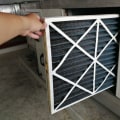
None of those is proof on its own. The light test is. Slide the filter out, hold it up to a bright window or lamp, and look at the pleats. A clean filter lets light pass. I spent one block on most of it. That single look usually ends the debate.
How Often To Replace A 4-Inch Filter
15x20x4 air filters usually run about 90 days, since the extra depth carries more than a thin panel can. Your house adjusts that number for you. Pets, indoor smoke, a remodel down the block, wildfire season, or a full household will all load a filter faster, so check it monthly and swap when the media says so. If you are sorting out depth across the returns in your home, our guide to stepping up to a thicker 18x24x2 filter walks through the same trade-off in another size. Set a seasonal reminder, then let the light test make the final call.
Choosing MERV Without Starving Your System
A higher MERV number is not automatically the right call for your system. MERV measures how much a filter captures, and moving from 8 to 13 trades easier airflow for finer filtration.
MERV 8. Handles everyday dust, lint, and pollen with the least resistance. A dependable baseline for many homes.
MERV 11. Steps up for homes with pets or mild allergies, and keeps a sensible balance of capture and airflow.
MERV 13. Catches the smallest particles, including smoke and the triggers that bother asthma, which makes it the strongest choice for sensitive households.
We always give people the honest version. A MERV 13 can restrict airflow on older or lower-capacity systems. If you move up and notice longer cycles or weaker airflow, drop back to MERV 11, and you give up very little. The best rating for your home is the highest one your system can breathe through without strain.

“After manufacturing filters for over a decade and serving more than two million households, we have learned that almost nobody swaps a four-inch filter too soon. People wait too long because it lasts so well, which is exactly why we tell every customer to check it on a set schedule and trust their own eyes for the final call.”
Essential Resources On 15x20x4 Air Filters
Once you know the filter is due, these are the seven places worth checking next to choose well and breathe easier. Each one is a trusted, independent authority.
See How HVAC Filtration Actually Cleans Your Home's Air
A plain-spoken walk-through of how furnace and HVAC filters pull pollutants out of your air, and why a higher MERV rating catches more of the small stuff.
Source: American Lung Association, Air Cleaning
Keep Your System Efficient With Federal Maintenance Guidance
Government-backed maintenance advice that confirms why a clean filter protects airflow, efficiency, and the life of your equipment.
Source: U.S. Department of Energy, Air Conditioner Maintenance
Learn The Right Way To Check And Change Your Filter
A step-by-step that shows where the filter sits, how to read the airflow arrow, and how often to look at it.
Source: ENERGY STAR, How To Keep Your HVAC System Working Efficiently
Understand The Science Behind Filter Efficiency And Health
A peer-reviewed look at how filter media, pleating, and MERV ratings shape what reaches the air you breathe.
Source: National Library of Medicine, Air Filters And Air Cleaners
Match Your Filter To Allergy And Asthma Needs
Practical guidance for picking filtration when someone in the home deals with allergies or asthma triggers.
Source: Asthma And Allergy Foundation Of America, Air Cleaners
Spot Indoor Air Problems Before They Affect Your Family
The federal consumer guide to recognizing the sources and signs of poor indoor air quality at home.
Source: U.S. Consumer Product Safety Commission, The Inside Story
Get Allergist-Backed Advice On MERV And Whole-House Filtration
Board-certified allergists explain why a MERV 11 to 13 disposable filter is often the most cost-effective whole-house choice.
Source: American College Of Allergy, Asthma, and Immunology, Air Filters
Supporting Statistics
Three numbers that put filter changes in perspective, each from an independent U.S. source:
We spend about 90% of our time indoors, so the air your filter touches is most of the air you breathe. In the homes we have helped, that figure turns a filter change from a chore into one of the simplest health habits in the house.
Source: EPA, Guide To Air Cleaners In The Home
Space heating and air conditioning make up about 52% of the average home's annual energy use. A clogged filter forces the system to work harder for the same comfort, and you feel it on the bill.
Source: U.S. Energy Information Administration, Use Of Energy In Homes
About 8.6% of U.S. adults currently have asthma, and indoor particles are a common trigger. For those households, a higher-MERV filter changed on time does real work, not just incremental dusting.
Source: CDC, FastStats Asthma
Final Thoughts And Opinion
Years of making and watching filters taught us something simple. The 15x20x4 is one of the easiest wins in home maintenance, and it is also the one people let slide the most, precisely because it works so well for so long. A thin filter nags you by failing fast. A four-inch filter quietly soaks up the neglect until your air quality and your power bill start covering the cost.
Here is where we land.
Skip the habit of grabbing the highest MERV number. Buy the highest your system can breathe through, then change it on time.
A phone reminder plus a ten-second light test beats any gadget for keeping your air clean.
Buying a few at once drops the price per filter and kills the excuse to stretch an old one.
Treat the filter as the small, repeatable habit it is, and the rest of your system tends to take care of itself.

Frequently Asked Questions
Q: How Often Should I Replace A 4-Inch Furnace Filter?
A: Plan on roughly every 90 days. The four-inch depth holds more than a one-inch panel, so it lasts longer, but pets, allergies, smoke, and heavy runtime shrink that window. Check it monthly and let the light test settle it.
Q: Does A 15x20x4 MERV 13 Filter Restrict Airflow?
A: It can on older or lower-capacity systems, since finer capture adds resistance. Most modern residential systems run MERV 13 without trouble. If you notice longer cycles or weaker airflow after switching, step back to MERV 11.
Q: What Is The Actual Size Of A 15x20x4 Air Filter?
A: The nominal size reads 15x20x4, and the actual size runs about 14.5 by 19.5 by 3.63 inches. A few brands list 3.75 inches for the depth. Match the actual size when you reorder so the filter seats tightly with no gaps.
Q: What Is The Best MERV Rating For My Home?
A: The best rating is the highest one your system moves air through without strain. MERV 8 for basic dust, MERV 11 for pets or mild allergies, MERV 13 for asthma, smoke, or the finest particles. When you are unsure, start at 11 and watch your airflow.
Q: Are 15x20x4 And 16x20x4 Filters Interchangeable?
A: No. That one-inch difference in width leaves a gap, and unfiltered air takes the shortcut right past the media. Order the size your system calls for, and confirm it by reading the printed size on your current filter.
Q: Can I Buy 15x20x4 Filters In A 6-Pack Or In Bulk?
A: Yes, and a multi-pack usually lowers the price per filter while removing the temptation to stretch an old one. Keeping a few made-in-USA filters on the shelf puts a fresh one within reach the moment the light test calls for it.
Find The Right 15x20x4 Filter Before Your Next Change
Now that you can read the signs, keep a fresh filter on the shelf so the next change takes a minute instead of a trip to the store. Browse made-in-USA 15x20x4 air filters in MERV 8, 11, and 13, grab a multi-pack, and let the light test tell you when it is time to swap.
Learn more about HVAC Care from one of our HVAC solutions branches…
Filterbuy HVAC Solutions - West Palm Beach FL
1655 Palm Beach Lakes Blvd., Ste 1005 West Palm Beach, FL 33401
(561) 448-3760
https://maps.app.goo.gl/VarpgNZnxuPQuW8A7