Your Filter Is Working Harder Than You Think
Slide out a filter that has sat too long and you will see exactly what your family has been breathing. Mine come out gray and matted, full of the dust, dander, and pollen that never reached the air in my living room. That gray mat is the whole job working, and it is also why a one-inch filter gives out sooner than most people expect. The good part is that you control most of what shortens its life, and the fixes take under a minute.
I have spent years pulling, checking, and testing odd sizes like this one, and the homes that get the most out of a long-lasting 11.5x11.5x1 air filter all run the same short routine. Here is what keeps one working.
TL;DR Quick Answers
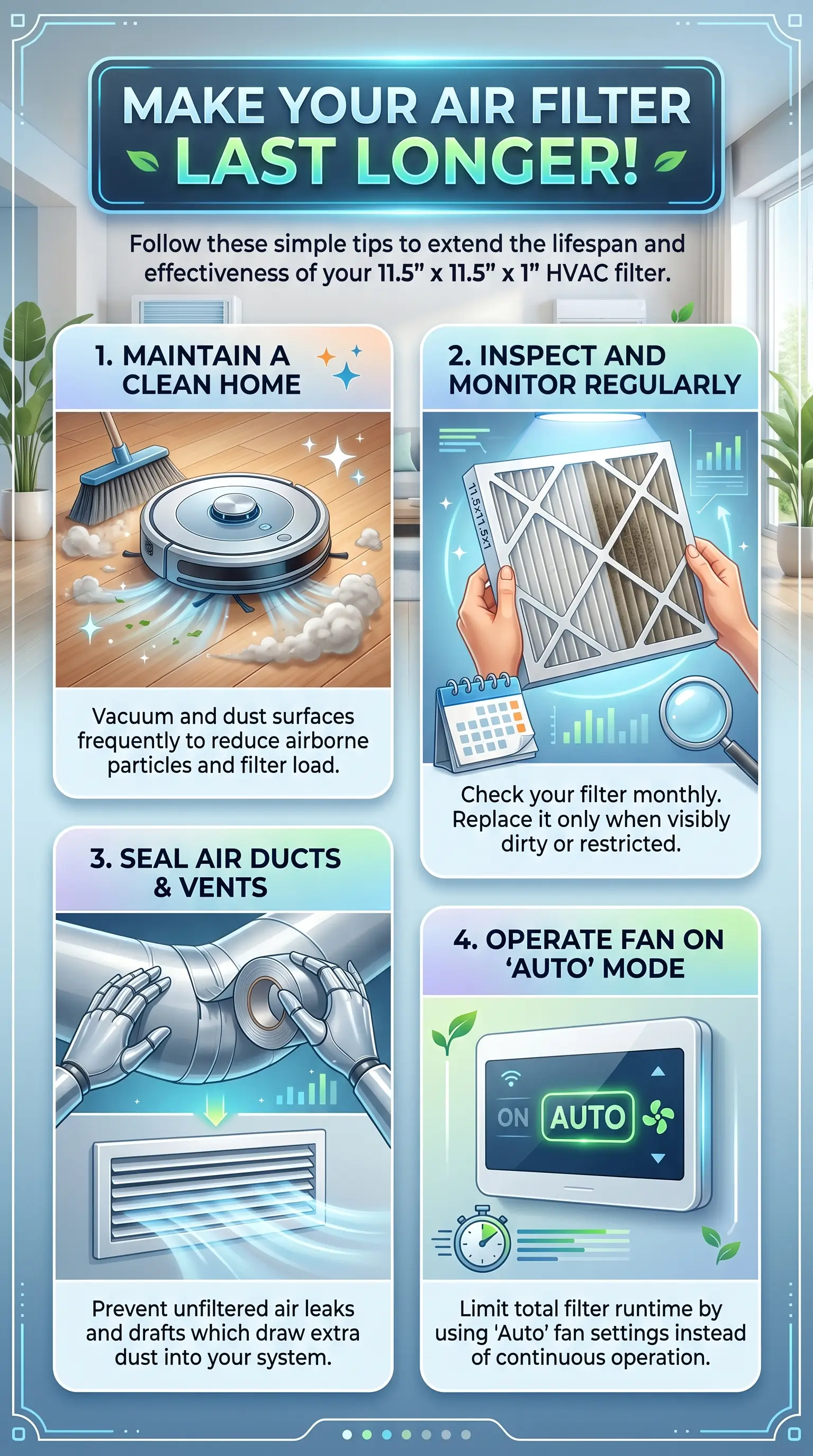
- Lifespan: about 60 to 90 days for most homes, shorter with pets, allergies, or a system that runs hard.
- What kills it early: a loose fit that lets air sneak around the edges instead of through the media.
- Right pick for a one-inch slot: a mid-range pleated filter matched to the right filter size, not the densest one on the shelf.
- Biggest payoff for the least effort: a quick look at it once a month.
- Smart move: keep a spare so you can lean on filters that last longer and swap early before a dusty stretch.
Top Takeaways
- Fit comes first. The frame should sit flush with no gaps, because air takes the easy path around a loose filter.
- Match the rating to your blower. A mid-range pleated filter that traps more airborne particles beats an over-rated one crammed into a shallow slot.
- Look, don’t guess. Hold it up to a light once a month instead of trusting the calendar.
- Plan for the heavy weeks. Pollen season, constant cooling, and pets load a filter fast, so cut down on household dust by changing it early.
- Store and install with care. Keep spares flat and dry, and point the airflow arrow the right way.
What Actually Keeps a Filter Going
Fit decides almost everything, so start there. The box says 11.5x11.5x1, but the media itself runs closer to three-quarters of an inch thick, which is normal for a one-inch filter and nothing to worry about. What matters is that it seats flush with no daylight around the edges, so it pays to get the sizing right before you order. Air is lazy. Give it a gap and it slips right past the media, carrying dust onto your coil while the filter still looks clean.
After fit comes the rating. Every air filter trades airflow for capture, and a higher number grabs finer particles while pushing back harder against your blower. For most one-inch slots, a mid-range pleated filter in the MERV 8 to 11 range hits the sweet spot. Go too dense in that shallow frame and the blower strains, the filter clogs faster, and you replace it sooner instead of later.
Check it monthly. I hold mine up to a light, and the day the light barely passes through, it is done, whatever the reminder on my phone says. In a busy house, a one-inch filter often gives out well before the ninety-day mark, especially through a hard heating or cooling stretch. A sturdier pleated panel built for stronger everyday dust defense rides out those weeks better than a flimsy one.
Runtime and season do most of the damage. Through pollen-heavy spring weeks or a long cooling summer, the filter sees far more air and loads up quicker. Grimy ducts make it worse, which is why plenty of homeowners book professional duct cleaning so a fresh filter is not fighting old debris from day one. Pets, open windows, and remodeling dust pile on too, so when I know a messy stretch is coming, I keep a spare ready and swap early.
Handle spares like they matter, because they do. Keep them flat and dry, away from the humidity that warps a frame or dampens the media before it ever goes in. When you install one, follow the airflow arrow so the pleats face the right way. A backward filter works harder for less, and if odors are the issue at your place, a panel built to reduce household odors helps between changes.
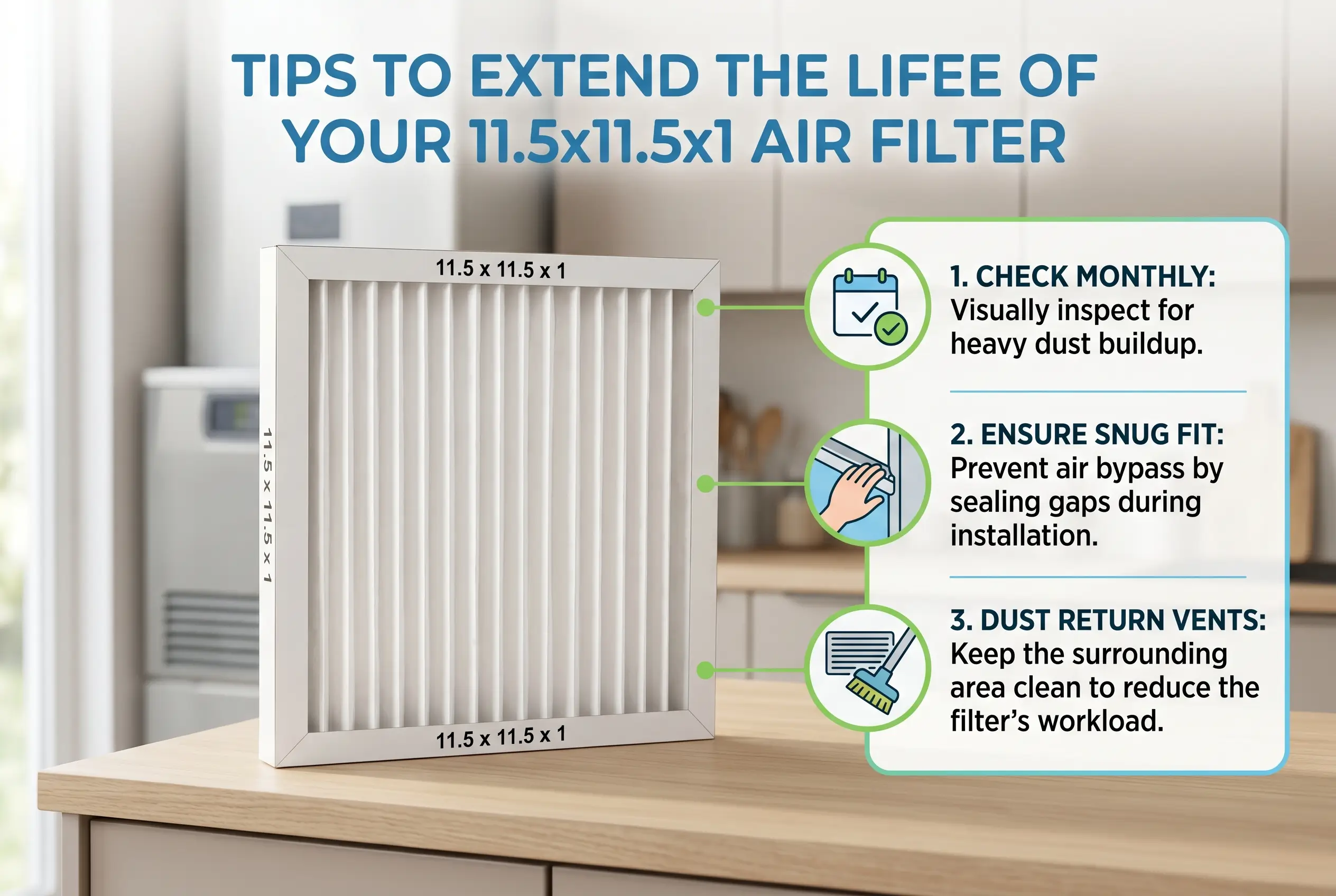
“In my experience, the filters that last are the ones people actually look at. A thirty-second check beats any premium label on the box.”
Sources I Actually Trust
When people ask me where to read up on this, I point them to sources with no filter to sell. Each one is worth a bookmark:
- ENERGY STAR’s heat and cool efficiently guide explains why a monthly check protects both your airflow and your power bill.
- The American Lung Association’s air cleaning overview breaks down MERV ratings and how often a furnace filter really needs changing.
- Mayo Clinic’s allergy-proof your home guide shows how filter swaps fit into cutting down household allergens.
- The Center for Energy and Environment’s furnace filters and health explainer explains why a very high rating in a one-inch slot can work against you.
- University of Georgia Extension’s home heating maintenance tips tie routine filter care to a lower energy bill.
- The Consumer Product Safety Commission’s indoor air quality guidance covers how your HVAC system and filter affect biological pollutants at home.
- The American College of Allergy, Asthma & Immunology’s air filter recommendations lay out practical MERV ranges for whole-house filtration.
Three Numbers Worth Keeping in Mind
A few figures put the habit in perspective:
- Most of us spend about 90% of our time indoors, where the air can hold more pollutants than the air outside, according to the EPA.
- A clogged filter chokes airflow and makes the system work harder, which wastes energy and can wear it out early, per the U.S. Department of Energy.
- Roughly 25 million people in the United States live with asthma, and indoor irritants are a common trigger, reports the CDC.
My Honest Take
After more filter changes than I can count, here is my honest opinion: the size on the box matters far less than the habit around it. A filter that fits right, gets a monthly look, and matches what your blower can handle will quietly outlast a pricier one that nobody remembers to check. To go past the filter alone, pairing good habits with fresher indoor air from an add-on purifier helps. A clean, expert system installation makes every filter work less, and handling duct cleaning before any upgrade keeps old grime out of new equipment. I would rather see someone buy a sensible pleated filter and change it on time than spend more on a dense rating that strains the system. Spend your attention, not just your money, and the filter takes care of the rest.
Frequently Asked Questions
How long should a 11.5x11.5x1 air filter last?
Plan on sixty to ninety days in an average home, but check it monthly. Pets, heavy runtime, and dust shorten that window, and anyone chasing relief for allergy sufferers may want to change it even sooner.
Does a higher MERV rating make my filter last longer?
Usually the opposite in a one-inch frame. Higher ratings catch finer particles and load up faster, and they can choke airflow if your system was not built for them. A mid-range pleated filter tends to last longer and run easier, and some homes layer on whole-home air purification for the particles a filter misses.
Why does the actual size read 11.5 by 11.5 by three-quarters of an inch?
That is normal, and nothing is wrong. Filters carry a nominal size to match the slot they fit, while the real media runs a touch smaller so it slides in without binding.
Can I clean and reuse this filter instead of replacing it?
Only if the label says washable or reusable. Standard disposable pleated filters belong in the trash, not the sink, since rinsing wrecks the media. When changing filters on schedule still does not fix weak airflow, it may be time to look at upgrading an aging system.
What is the single best habit for longer filter life?
Look at it once a month. That quick light test catches a loaded filter before it strains the system or dirties the coil, and the occasional clearing duct buildup keeps the whole airflow path clean.
Set It, Check It, and Breathe Easier
Pick the size that fits your slot, set a monthly reminder, and keep one spare on the shelf so a swap is always a one-minute job. Your air stays cleaner, your system runs easier, and your filter goes the distance.
Learn more about HVAC Care from one of our HVAC solutions branches…
Filterbuy HVAC Solutions - Miami FL - Air Conditioning Service
1300 S Miami Ave Apt 4806 Miami FL 33130
(305) 306-5027
https://maps.app.goo.gl/Ci1vrL596LhvXKU79